

AFTER THE CIVIL WAR, BLACK POLITICAL POWER ROSE ACROSS THE SOUTH.
For a moment, America edged toward its promise of equality, but in Mississippi a campaign of violence and lawmaking reversed that future— and set a model for voter suppression that would spread across the entire country.


The Precedent is an ongoing initiative that examines how Mississippi’s leaders used the Mississippi Plan of 1875 to overthrow Reconstruction, crush Black political power, and set the terms of Jim Crow. It re-frames state and national history by placing this campaign of violence, lawmaking, and disenfranchisement at the center of how we understand voting rights and political power today.
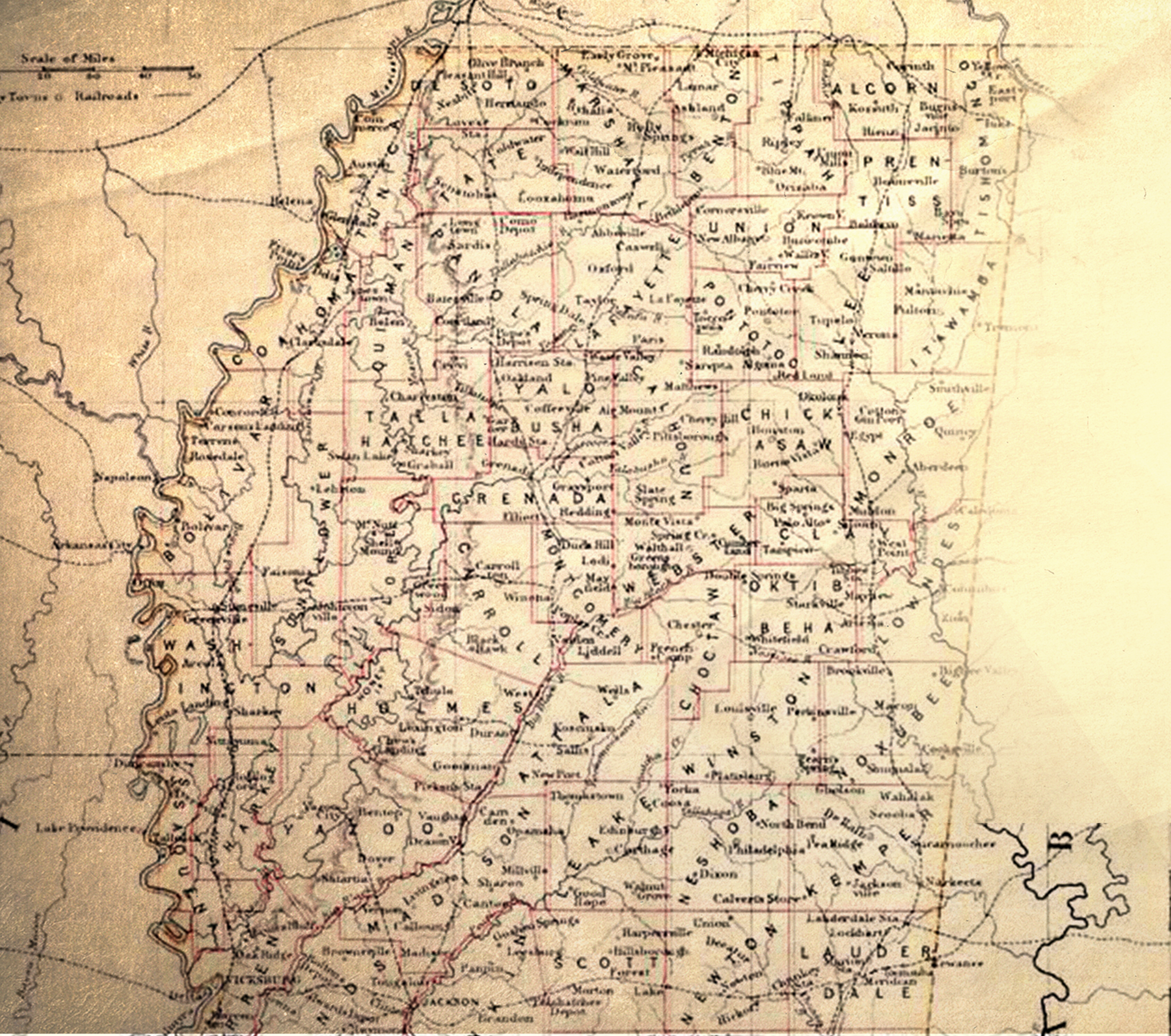
Our animation series unpacks how that reality was engineered. Each short episode walks through a specific move of the Mississippi Plan, from the end of the Civil War and Black political gains to the campaign of terror, the Clinton Massacre, and the laws that locked in one-party rule.
Episode 2
People, Places, Events
The Black leaders, small towns, and flashpoint events that shaped Reconstruction in Mississippi and sparked the backlash that followed.
Episode 3
1890 to Today
From the 1890 constitution to modern voter roll purges and quiet rollbacks, this episode traces how the Mississippi blueprint still echoes through today’s democracy.
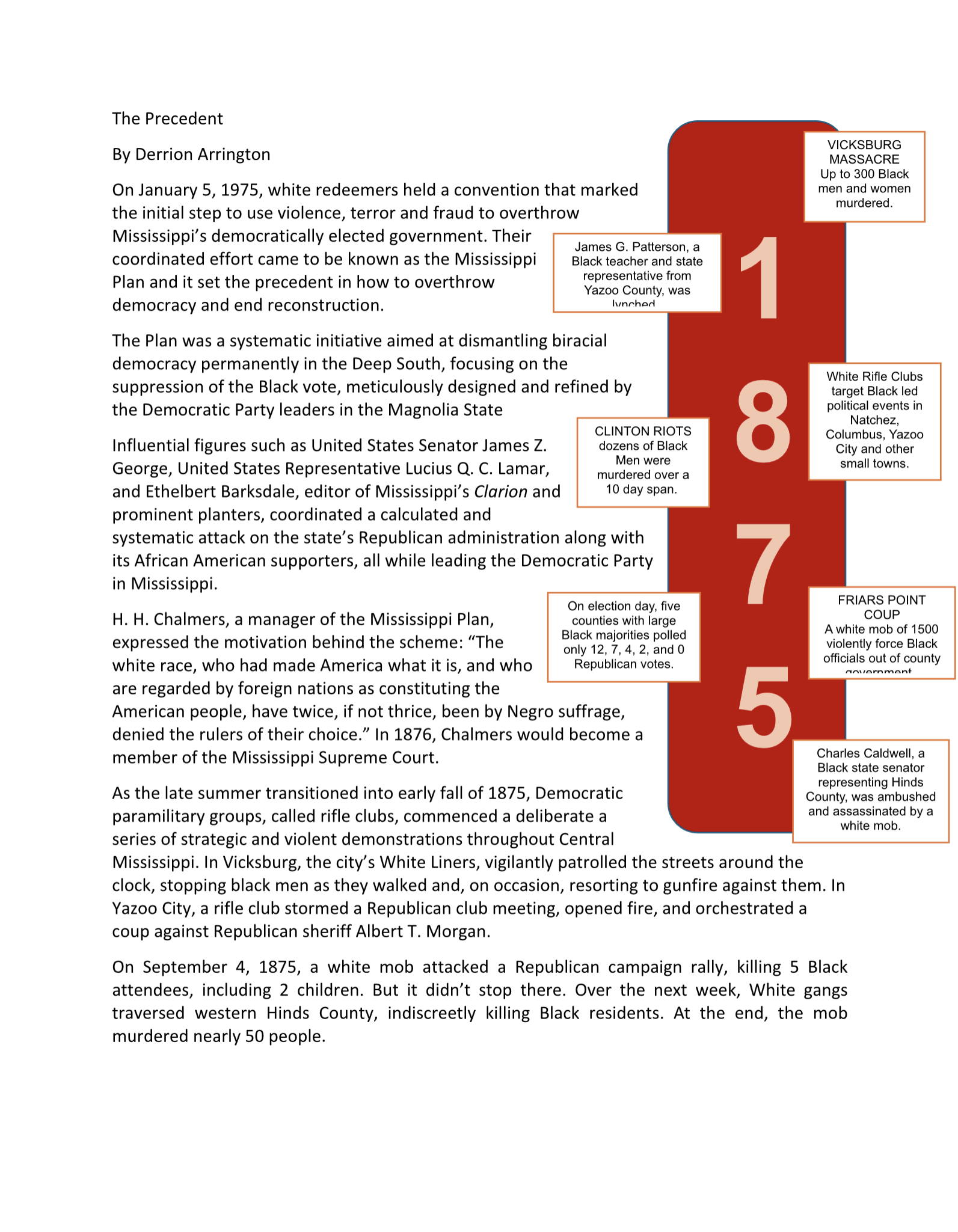
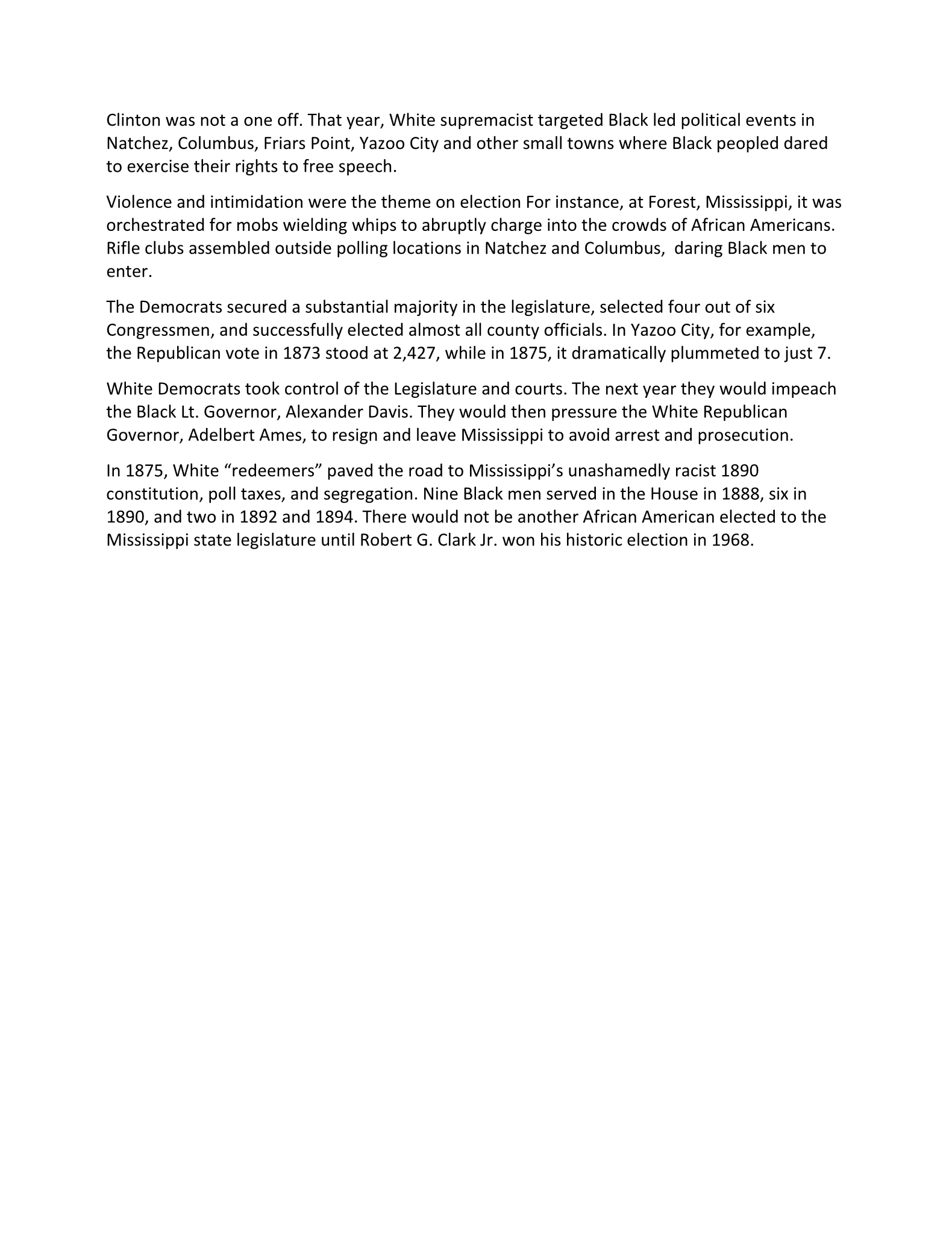
The history and its consequences
These two essays expand the story told in The Precedent. One documents the coordinated violence and political collapse of Reconstruction in Mississippi and the other explores why this history matters now, and how its consequences continue to shape democracy, power and participation today.

Key Moments In The Story
The 14th Amendment granted citizenship to all persons born or naturalized in the U.S., including formerly enslaved people, and guaranteeing "equal protection of the laws" and "due process" to everyone, applying these fundamental rights to the states. It redefined citizenship, overturned the Dred Scott decision, and ensures states cannot deny life, liberty, or property without due process, fundamentally shaping American law, civil rights, and equal protection.
1868 - redefining citizenship

Mississippi voters ratified a new state constitution that established civil rights for African Americans, creating public schools, and expanding suffrage, allowing Mississippi back into the Union.
1869 - mississippi’s short-lived constitution

1870 - The Right to Vote Shall not be denied because of race
The 15th Amendment was intended to prohibit the federal and state governments from denying a U.S. citizen the right to vote based on "race, color, or previous condition of servitude." However, after the fall of Reconstruction, most Black men were marginalized under state laws and decades with discriminatory practices like poll taxes, literacy tests, and grandfather clauses. In Mississippi, Black voters were effectively disenfranchising until the Voting Rights Act of 1965.

1870 - First Black U.S. Senator From Mississippi
Hiram Revels takes office, a visible symbol of Black political power in the South.
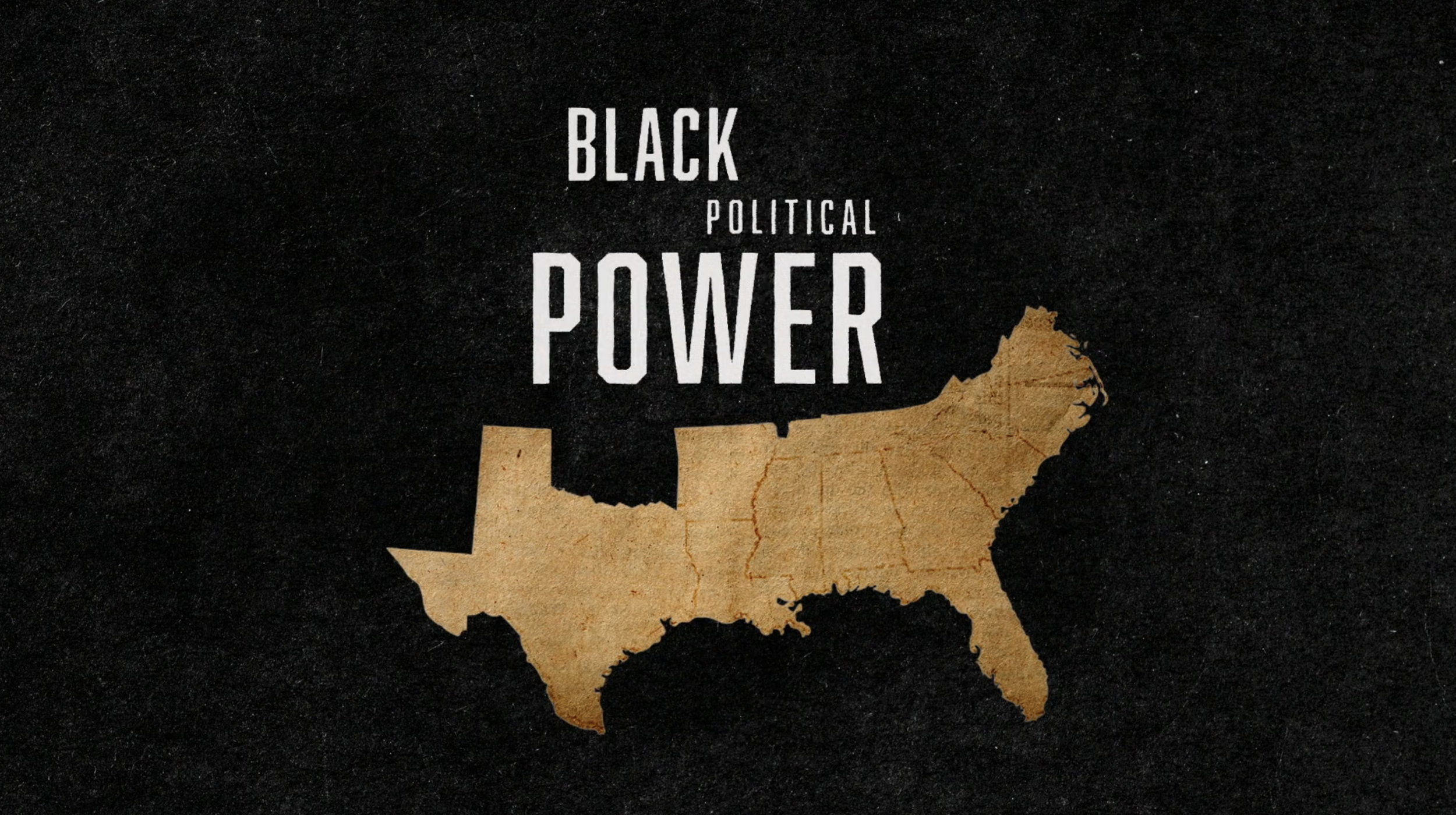
1874 - Height of African-American influence in state government
At least 226 black Mississippians held public office during Radical Reconstruction, far more than in Arkansas (46) or Tennessee (20), and among them were the first and only black US senators of this period, Hiram Rhoades Revels and Blanche K. Bruce.
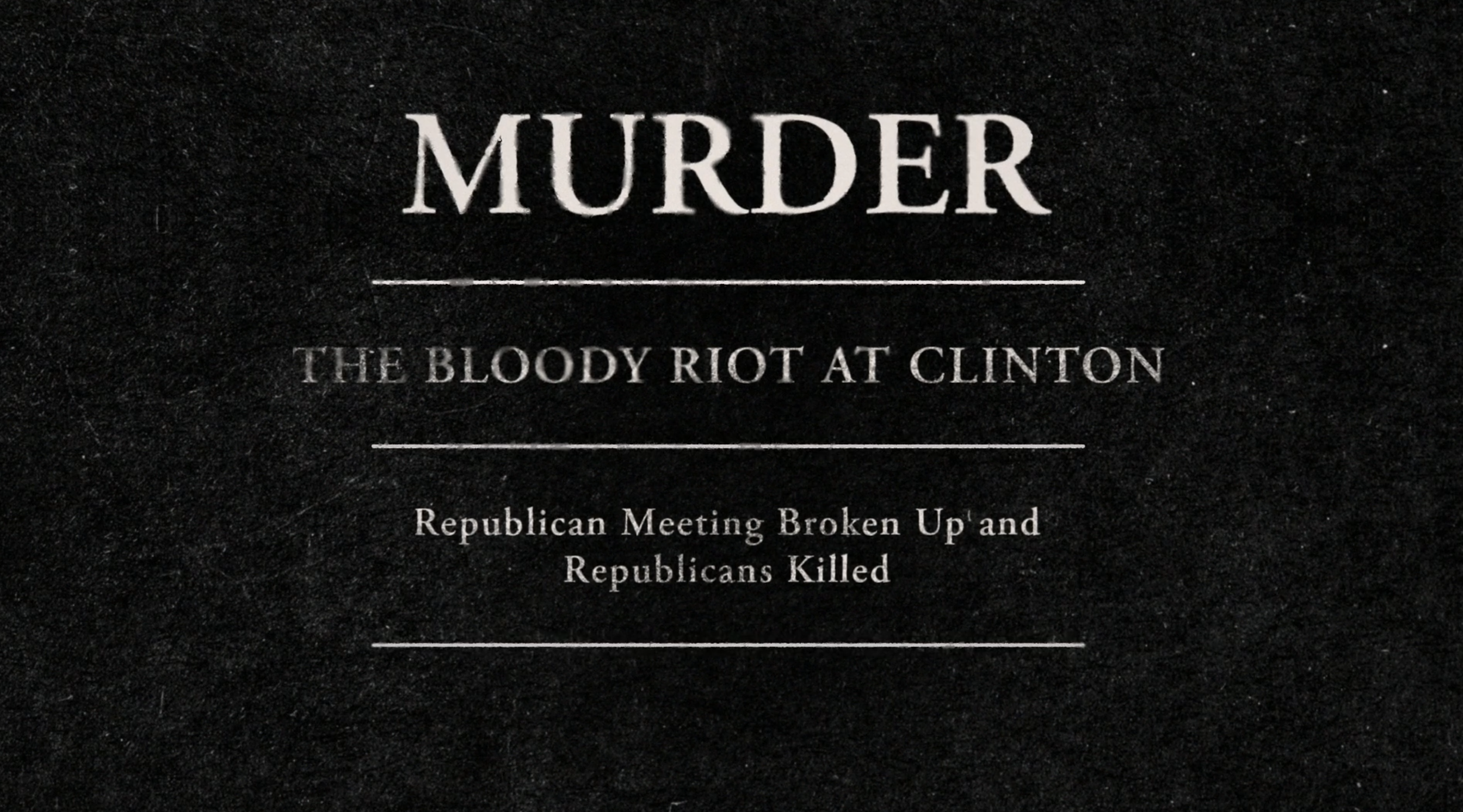
1875 - The Mississippi Plan and the clinton massacre
White leaders in Jackson develop a plan to regain control through violence and fraud. Armed groups attack Black voters and officials statewide, including the massacre in Clinton and the assassination of Senator Charles Caldwell.

Rutherford B. Hayes won a contested presidential election by promising to withdraw the last federal troops from the South and ignore the hideous ways that southern Democrats regained power. John Lynch, Mississippi’s last Republican congressman, warned that “the war was fought in vain.”
1876 - The corrupt bargain

1883 - The supreme court makes way for jim crow
The Supreme Court struck down the Civil Rights Act of 1875, A Reconstruction-era law guaranteeing African Americans equal access to public accommodations (like hotels, transport, theaters) and jury service, prohibiting discrimination based on race, color, or servitude.

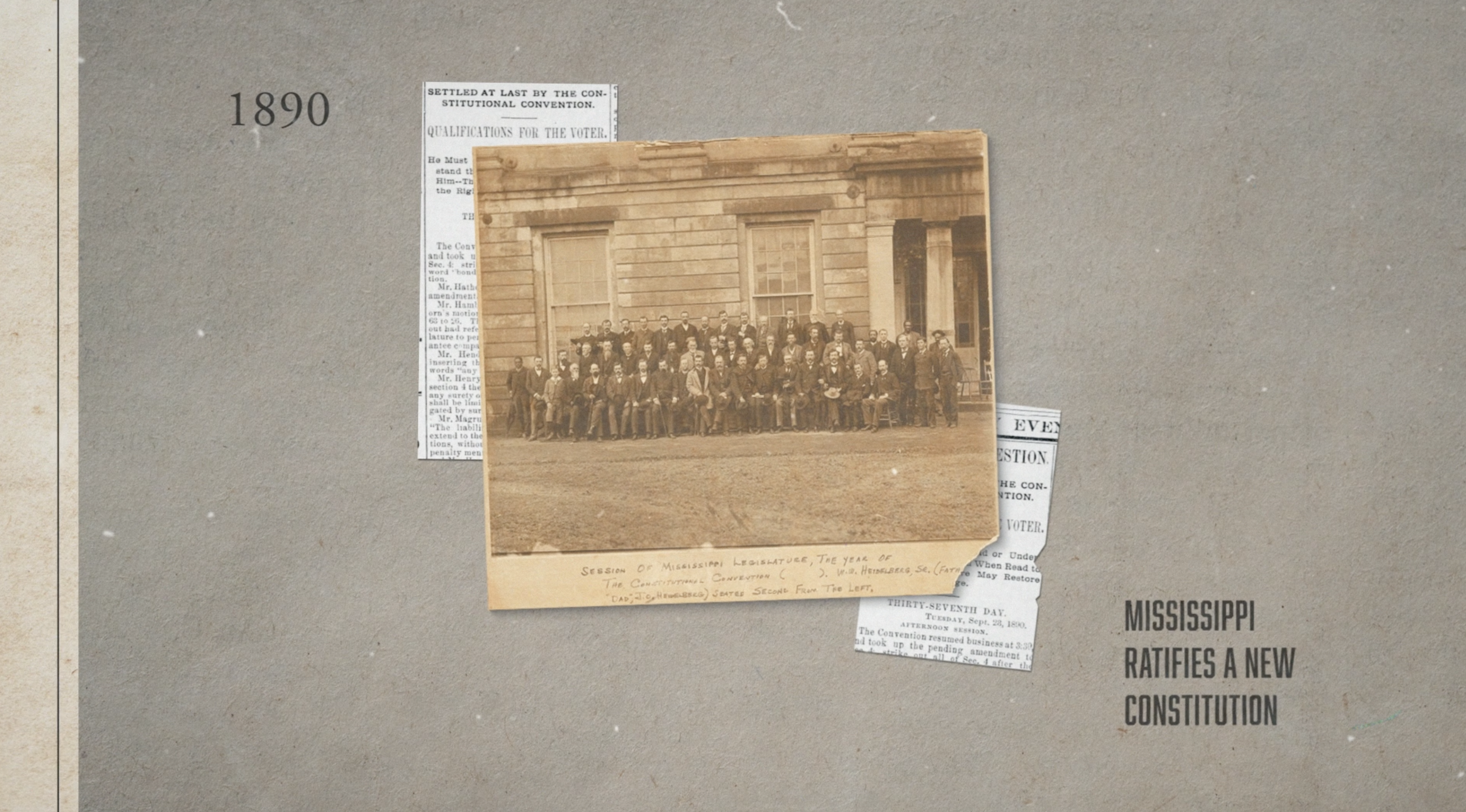
1890 - A constitution built for exclusion
Mississippi adopts a new constitution with poll taxes, literacy tests, and lifetime voting bans that sharply cut Black voter registration and become a model for other states. During Reconstruction, 90% of Mississippi’s black men were registered voters. By 1892, the figure had plummeted to 6%, where it stayed until the civil rights campaigns of the 1960s
1896 - separate but equal
In Plessy v. Ferguson, the Supreme Court decision cemented "separate but equal" segregation in public life, disenfranchising Black voters and enforcing decades of brutal discrimination.

early 1900s - emergence of the lost cause
White Redeemers rewrote Civil War and Reconstruction history, casting slavery as benign and depicting the Civil War as a struggle over states’ rights, not slavery. The Lost Cause ideology framed the Confederacy was an honorable endeavor. Reconstruction was deemed a failure. It was thought of as a time of “Negro rule” when African Americans had proved incapable of properly exercising their political rights. Throughout the South, monuments were erected in honor of the Confederacy and white supremacy. The Ku Klux Klan reemerged.

1954 - the start of the civil rights movement
Years of planning and litigation by civil rights attorneys, including Thurgood Marshall, let to the Supreme Court’s decision Brown v. Board of Education. The Court declared state-sponsored segregation in public schools unconstitutional, a crucial legal victory.
The following year, Emmett Till was lynched in Mississippi. The brutal murder of a 14-year-old boy and the acquittal of his killers sparked national outrage and sparked the movement. These events helped mobilize mass protests, leading to major legislative changes like the Civil Rights Act of 1964 and Voting Rights Act of 1965, challenging segregation and discrimination against African Americans.
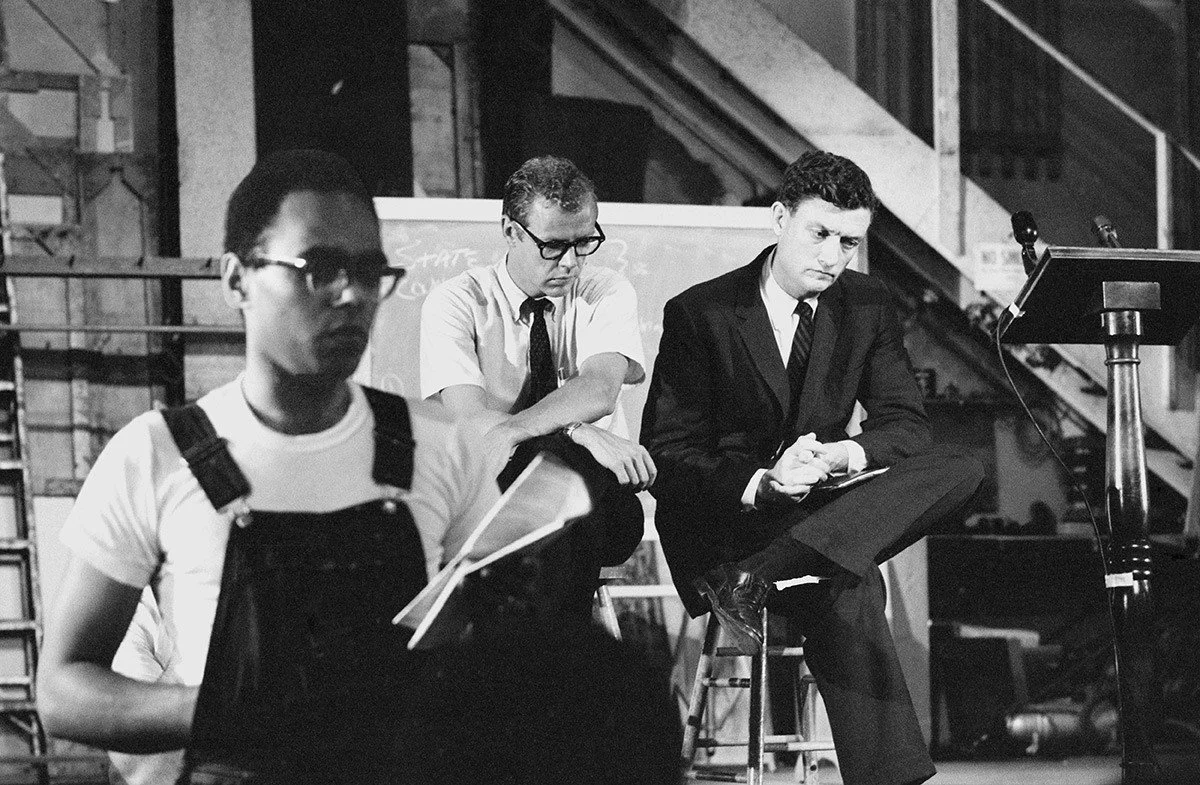
1964 - freedom summer
The Summer of 1964 was a pivotal year for the civil rights movement. President Lyndon Johnson signed the Civil Rights Act that June. The Act outlawed discrimination based on race, color, religion, sex, and national origin, ending segregation in public places, integrating schools, and prohibiting employment discrimination.
But the movement continued. Organized by the Student Nonviolent Coordinating Committee (SNCC) and the Congress of Racial Equality (CORE) and run by the Council of Federated Organizations (COFO), Mississippi Freedom Summer was a campaign to integrate Mississippi’s segregated political system.
Voter registration was the cornerstone of the summer project. Although approximately 17,000 black residents of Mississippi attempted to register to vote in the summer of 1964, only 1,600 of the completed applications were accepted by local registrars. Highlighting the need for federal voting rights legislation, these efforts created political momentum for the Voting Rights Act of 1965.
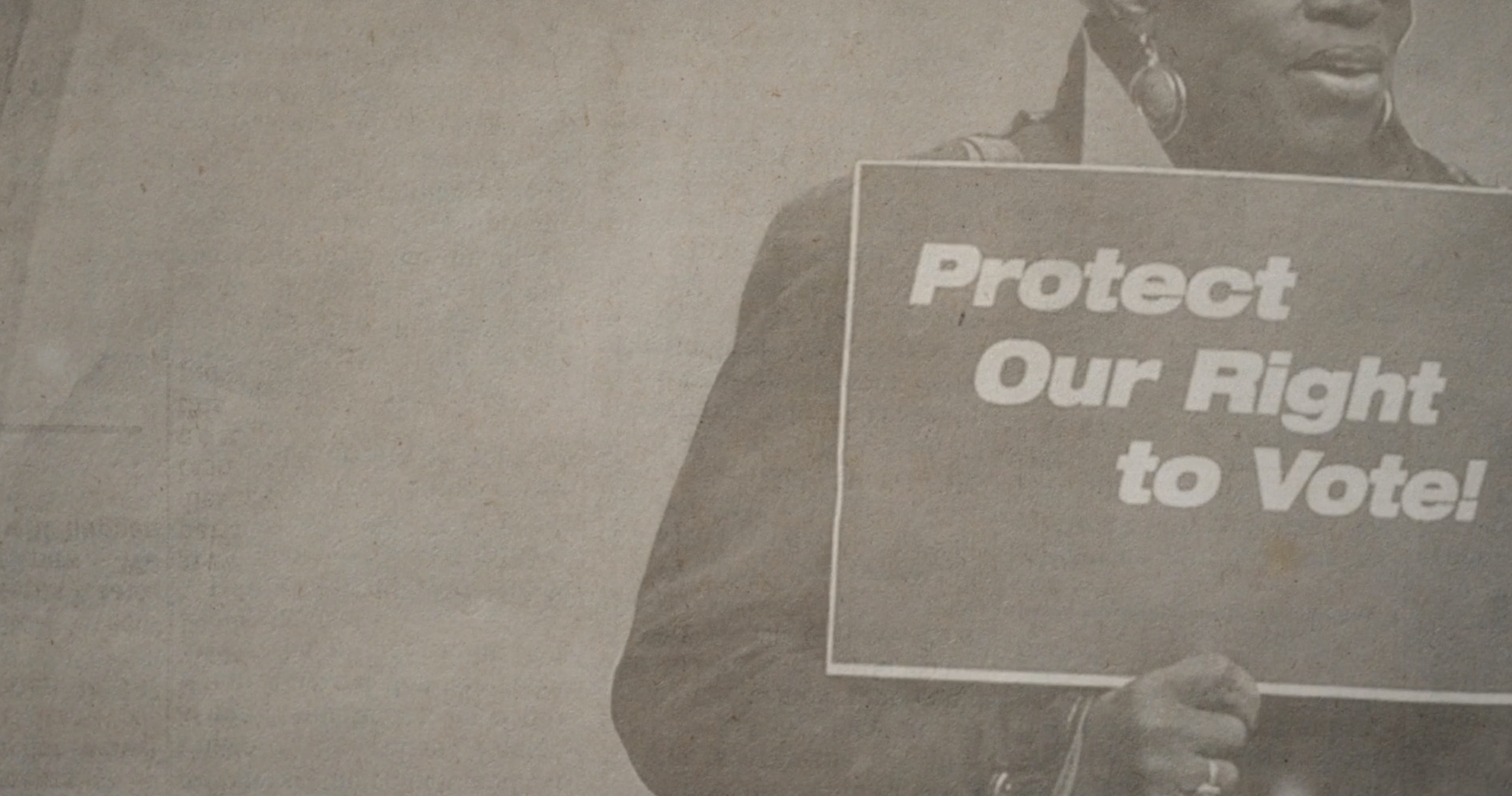
1965 - enforcing the 15th amendment
The 1965 Voting Rights Act is the most successful civil rights legislation in American history. The measure outlawed discriminatory voting practices like literacy tests and poll taxes, ensuring federal oversight and preclearance for voting law changes in discriminatory areas to protect minority voting rights, significantly increasing Black voter participation and Black political power, particularly in the South.
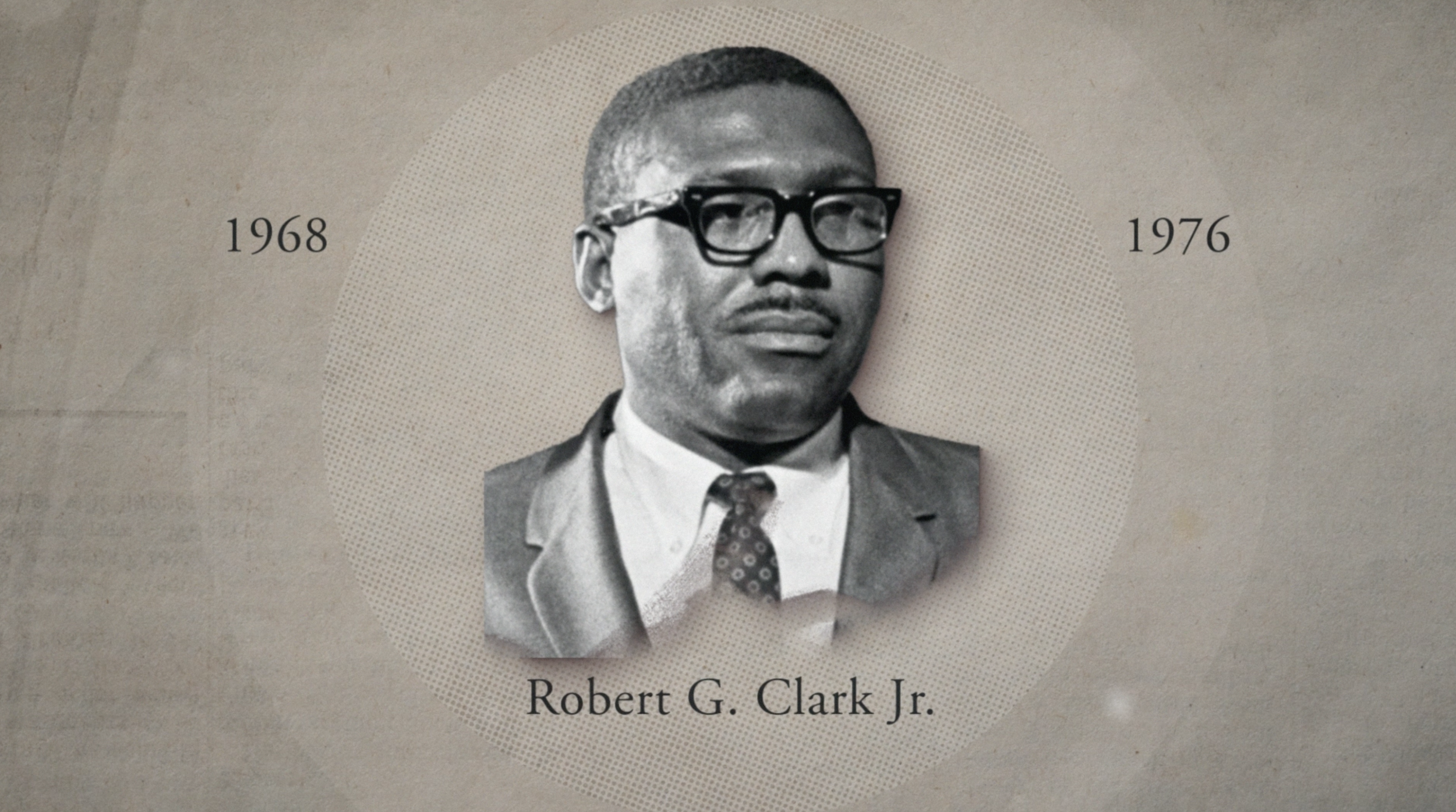
1968 - 1976 - One black legislator, alone
Robert G. Clark Jr. becomes the first Black Mississippian elected to the state legislature since Reconstruction and serves for years as the only Black member in the body.

ABOUT THIS PROJECT
The Precedent is a documentary project produced by the ACLU of Mississippi in collaboration with RED SQUARED.
The film anchors the story and the animated explainers break down the political strategy, violence and legal changes that ended Reconstruction and shaped Mississippi’s 1890 constitution. Together, they connect that history to the work of organizers, lawyers and scholars fighting modern efforts to restrict voting rights and political power.